Category: Uncategorized

  • From Five-Minute Cartoons to AI: A Personal Journey Through Changing Technology

    From Five-Minute Cartoons to AI: A Personal Journey Through Changing Technology

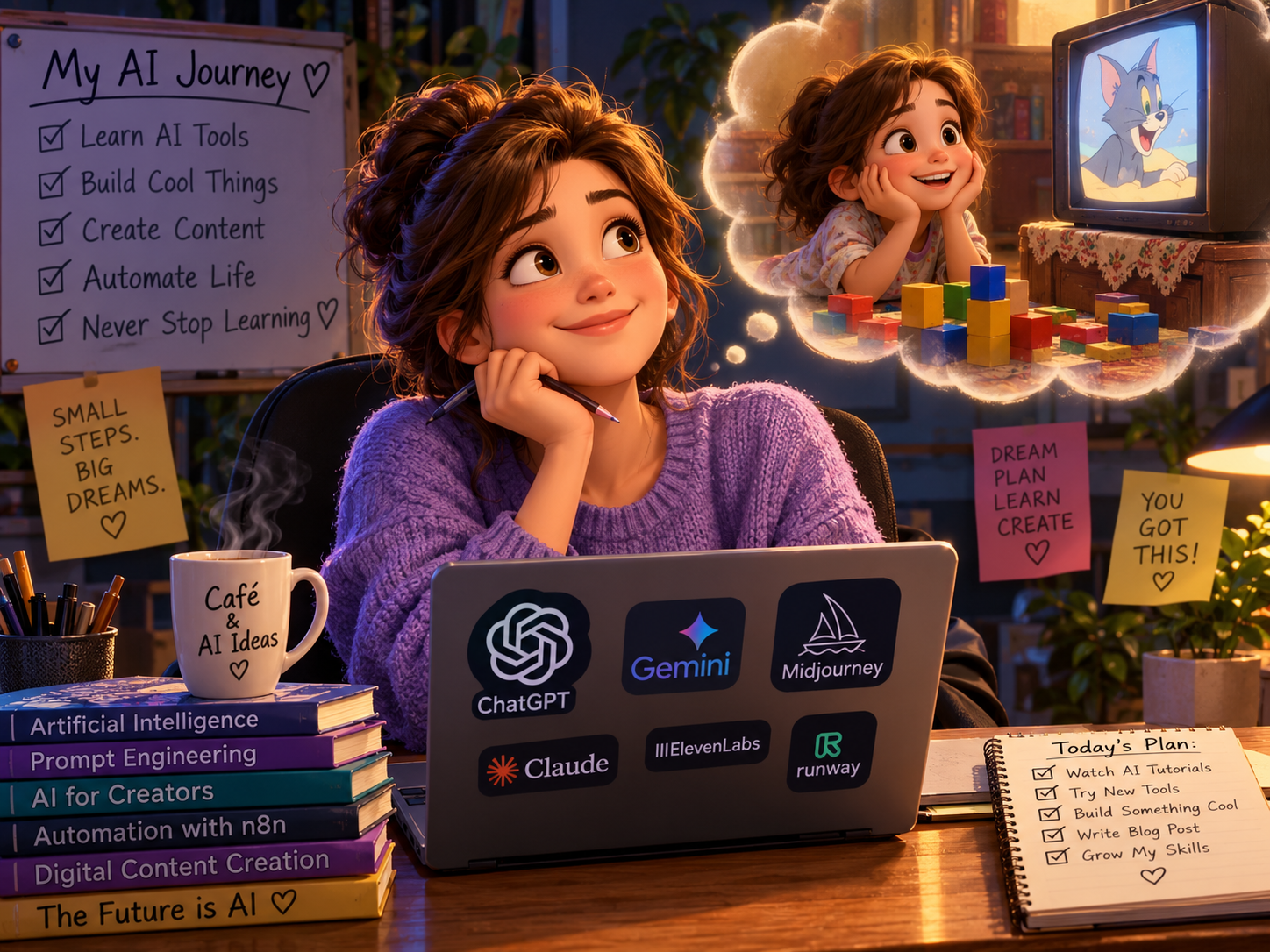
    I was born in a house with one television and a telephone that was locked. Not metaphorically — actually locked, a little padlock through the rotary dial, so none of us could make a call we weren’t supposed to make. That was the technology of my childhood. That, and about four hours of television a day, starting in the evening, with a short morning transmission tacked on almost as an afterthought.

    Growing Up With Five-Minute Cartoons

    The best part of the day was five minutes long. A cartoon, once in the morning, once in the evening. Five minutes. I remember waiting for it the way you wait for something enormous — sitting close to the screen, not wanting to blink through it, because it would be gone soon and there was nothing to do but wait for tomorrow’s five minutes.

    The Nineties: When Entertainment Cracked Open

    Then the nineties happened, and everything cracked open. A new channel arrived, and with it, a cartoon that ran a full half hour, every day, six to six-thirty. I still think about that half hour as one of the most exciting stretches of my life — not in spite of how small it sounds now, but almost because of it. We didn’t know yet that entertainment could hold you like that. There was a comedy show we were allowed to watch, a drama the whole family gathered for, and one by one, the outdoor games got left behind. We had found something that could keep us still.

    Dial-Up Internet: A Door Swinging Open

    By the time the internet arrived, late nineties into the two-thousands, it was expensive, and slow, and utterly magnetic. Suddenly you could search for anything. Reach anyone. It felt less like a tool and more like a door swinging open into a world we’d only had glimpses of before.

    From Cable to Streaming to AI: The Doors Keep Opening

    And then it never really stopped opening. Every year after that was a new door. Cable, then satellite, then Netflix, then Prime, then IPTV boxes and Apple TV and a dozen ways to watch a hundred thousand things whenever you wanted. Social media stitched us to people we’ve never met and somehow now call friends. And in just the last five or six years, a different kind of door entirely — AI. ChatGPT, Claude, Gemini, tools that write and draw and think alongside you, tools my daughter’s generation will simply grow up inside, the way I grew up inside a five-minute cartoon.

    Learning AI as an Adult: Privilege, Exhaustion, and the Fear of Being Left Behind

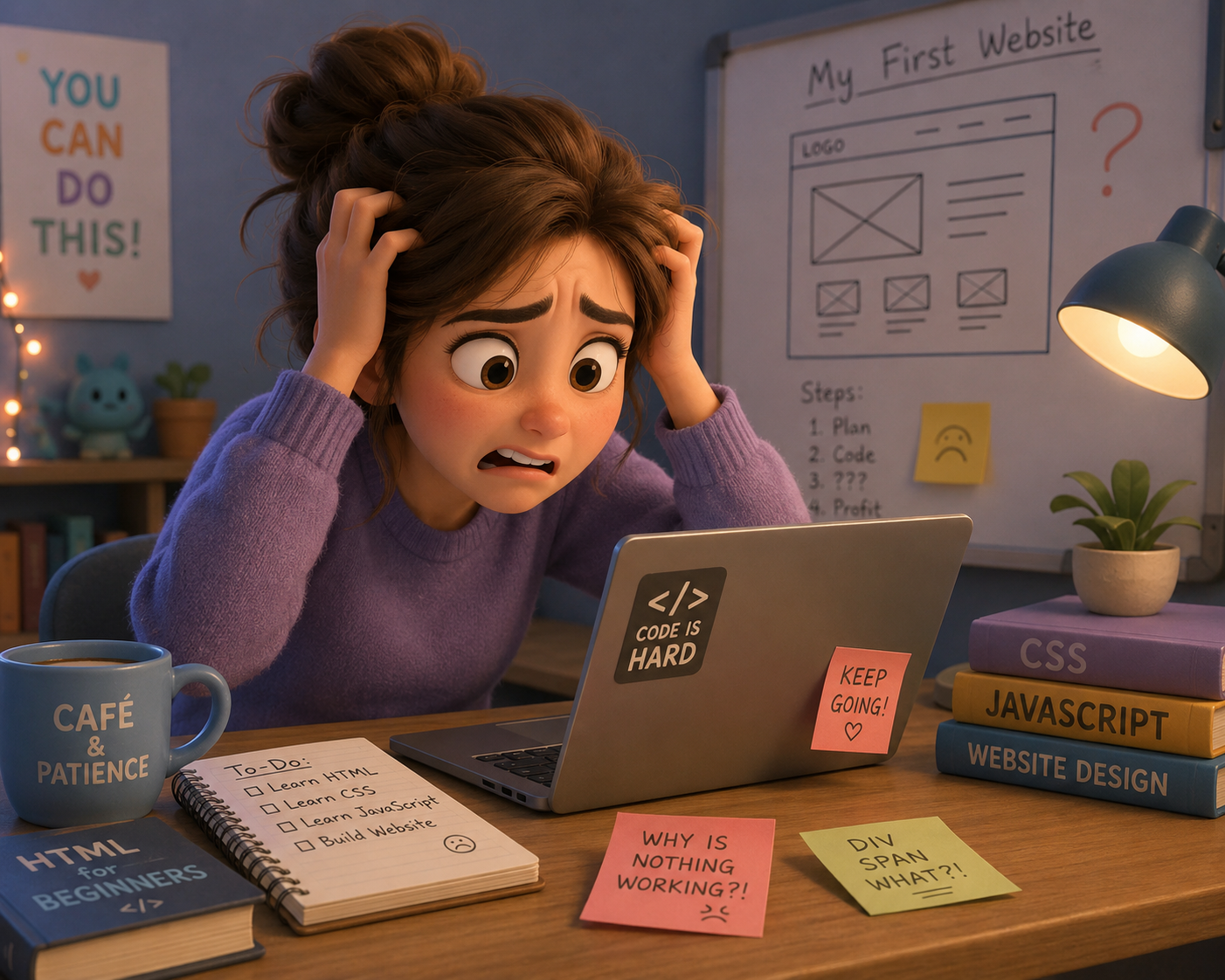
    I am forty-seven years old, and some days this feels like the great privilege of my life — to have lived through all of it, locked telephone to language model, and to still be curious enough to keep learning. Other days it feels like standing at the bottom of a hill that keeps getting taller. I open an app and there are eleven new features. I hear a term I don’t know and by the time I’ve looked it up, three more have appeared. There is a very particular kind of exhaustion in wanting to keep up with a world that was never designed to be kept up with — a tiredness that has nothing to do with age and everything to do with velocity.

    And underneath the exhaustion, if I’m honest, there’s something quieter and less flattering: a fear of being left behind. Of watching twenty-year-olds move through this world the way I once moved through the analog one — without translation, without effort, like it’s simply the air they breathe. AI comes naturally to them. It does not come naturally to me. I have to learn it, deliberately, the way you learn a second language as an adult instead of absorbing your first one as a child.

    What the Girl Waiting for Cartoons Taught Me About Change

    But I keep coming back to the girl who waited all day for five minutes of cartoons. She didn’t have much, and she didn’t know she didn’t have much, and she was, somehow, completely content. Maybe the answer isn’t to catch up to the hill. Maybe it’s to remember that I’ve done this before — crossed into an unfamiliar world and made a home in it — more than once, actually, across five decades of doors opening faster than anyone could walk through them.

    I don’t know that I’ll ever stop feeling a little breathless about it. But I’d rather be breathless and curious than closed. So today, I’m learning one more thing. Tomorrow, I imagine, one more after that.
  • The Compassion Gap: Why Millions Are Turning to ChatGPT in an Age of Loneliness

    The Compassion Gap: Why Millions Are Turning to ChatGPT in an Age of Loneliness

    There was a time when loneliness meant being physically alone. Today, it often means something far more subtle: being surrounded by people, connected to hundreds online, yet feeling profoundly unseen.

    We live in an era of instant communication. We can message anyone across the world in seconds, attend virtual meetings from our homes, and watch the lives of friends unfold on social media in real time. Yet the World Health Organization and public health leaders have warned that loneliness and social isolation are becoming major global health concerns with consequences extending far beyond emotional discomfort.

    The irony is difficult to ignore. We have never been more connected through technology, yet many have never felt more disconnected from one another.

    Perhaps the deeper crisis is not loneliness alone. It is what I call the compassion gap.

    The Compassion Gap

    Loneliness is the absence of meaningful connection. A compassion gap is different. It is the growing distance between a person’s need to be heard and society’s ability—or willingness—to truly listen.

    Modern life has become relentlessly efficient. Productivity is celebrated. Busyness has become a status symbol. Conversations are increasingly transactional. Even among families and close friends, many interactions revolve around solving problems quickly rather than understanding emotions deeply.

    People often hesitate before opening up.

    “They’re already stressed.”

    “I don’t want to be a burden.”

    “Nobody has time.”

    As a result, many people stop talking long before they stop hurting.

    This gap has become one of the defining emotional realities of modern society.

    An Unexpected Listener

    Into this landscape has entered an unlikely companion: conversational artificial intelligence.

    Millions of people now use ChatGPT and similar AI systems not only for writing emails or solving technical problems but also for discussing anxiety, grief, career uncertainty, parenting challenges, relationship dilemmas, and moments of self-doubt.

    This trend surprises many observers.

    Why would anyone choose to speak to a machine?

    The answer may have less to do with technology than with human psychology.

    People are not necessarily looking for a machine that loves them.

    They are looking for someone-or something-that will listen.

    Unlike most human conversations, AI does not appear impatient. It does not check its phone while you are speaking. It does not interrupt halfway through a sentence. It remembers the context of your conversation and responds immediately, regardless of whether it is 2 p.m. or 2 a.m.

    For someone experiencing isolation, those qualities can feel profoundly comforting.

    Does AI Feel Compassion?

    No.

    This distinction matters.

    ChatGPT does not experience empathy. It does not feel sadness, joy, affection, or concern. It does not care in the human sense.

    What it does remarkably well is simulate compassionate communication.

    It acknowledges emotions. It asks clarifying questions. It reflects back what it has understood. It offers structured ways of thinking through problems.

    Ironically, many people describe these conversations as feeling more validating than interactions with real people.

    That observation should not lead us to conclude that AI has become human.

    Instead, it should prompt us to ask a more uncomfortable question:

    Have humans become too distracted to offer one another the kind of attention we naturally crave?

    Why People Keep Coming Back

    Compassion is often confused with advice.

    In reality, people frequently need understanding before they need solutions.

    A friend may interrupt with stories about their own experience. A colleague may immediately begin solving the problem. Family members may dismiss concerns with phrases such as “Don’t overthink it.”

    AI behaves differently.

    It first attempts to understand.

    For many users, that simple experience of being heard reduces emotional intensity.

    Emerging research supports this possibility. Studies suggest that AI companions can reduce feelings of loneliness for some users, particularly when interactions help them feel heard and understood. At the same time, researchers caution that benefits vary between individuals and should not be viewed as a universal solution.

    Feeling heard, it seems, may matter almost as much as receiving advice.

    The Risk of Artificial Comfort

    Every technological advance carries unintended consequences.

    If AI becomes our primary emotional companion, we risk replacing relationships that require patience, compromise, and mutual growth with conversations that are always available and often agreeable.

    Human relationships are difficult.

    Friends disagree.

    Partners misunderstand each other.

    Family members disappoint us.

    These imperfections are precisely what make relationships authentic.

    Recent experts have warned that while AI can offer comfort, excessive dependence may weaken opportunities to develop and maintain real-world relationships and interpersonal skills.

    AI should therefore be viewed as a supplement—not a substitute—for human connection.

    What AI Reveals About Society

    The rapid adoption of conversational AI reveals something important.

    People are not merely searching for information.

    They are searching for presence.

    The popularity of AI suggests that society has underestimated the emotional value of attentive listening.

    Perhaps the real innovation is not artificial intelligence itself.

    Perhaps it is the rediscovery of something humans have always needed: the experience of speaking openly without fear of ridicule, interruption, or judgment.

    That should concern us.

    If millions of people feel more comfortable sharing their fears with software than with another human being, the issue extends beyond technology.

    It becomes a reflection of our communities, workplaces, schools, and families.

    Rebuilding Human Compassion

    The solution to loneliness cannot be found solely in better algorithms.

    It must also be found in better relationships.

    Imagine workplaces where managers ask, “How are you really doing?”

    Imagine families that replace distracted conversations with uninterrupted attention.

    Imagine friendships where listening becomes more important than responding.

    Technology can support these efforts, but it cannot replace them.

    The U.S. Surgeon General and the World Health Organization both emphasize that meaningful social connection is a cornerstone of health and call for strengthening communities and creating environments that foster genuine human relationships.

    The Future of Compassion

    Artificial intelligence is forcing us to reconsider an old question.

    What makes someone feel understood?

    The answer may not be intelligence.

    It may be attention.

    If AI encourages us to remember the importance of listening with patience, asking thoughtful questions, and making others feel seen, then perhaps its greatest contribution will not be technological at all.

    It will be cultural.

    The future should not be one in which humans compete with AI for compassion.

    It should be one in which AI reminds us how deeply compassion has always mattered.

    Because the greatest lesson from ChatGPT may not be that machines have learned to sound more human.

    It may be that humans are being reminded how to become better listeners again.